To get out of a toxic relationship, first recognize the unhealthy patterns and accept that it is affecting your well-being.
Build support by reaching out to trusted people and create a safe plan for leaving.
Set clear boundaries and communicate your decision if it feels safe to do so.
After leaving, limit contact and focus on healing, self-care, and rebuilding your confidence.
There is a quiet kind of pain that comes from being in the wrong relationship. It is not always loud or obvious. Sometimes it looks like constantly second-guessing yourself, feeling drained, or trying harder just to feel loved. I have been there, and I know how confusing it can feel when your heart says stay, but your peace says go. If you are searching for how to get out of a toxic relationship, you are already more aware than you think. And awareness is where things begin to shift.
In this space, I want to gently walk you through how to get out of a toxic relationship in a way that feels real and doable.
Table of Contents
What Is a Toxic Relationship

A toxic relationship is not just about arguments or disagreements. It is about patterns that slowly break your sense of self. It is when love starts to feel like pressure, confusion, or constant stress.
You may notice emotional manipulation, a controlling partner, or a deep lack of support that leaves you feeling alone even when you are not.
Over time, these unhealthy relationship patterns create emotional exhaustion. You feel like you are always trying to fix things, yet nothing really changes.
Many of these dynamics stem from a power imbalance in which one person holds emotional or practical control. This often grows from a lack of boundaries, where your needs are pushed aside again and again.
What the Research Says: A study found that even if there is no physical abuse, emotional and psychological toxicity alone can deeply damage mental health. This validates why many people in toxic relationships feel constantly stressed, confused, or emotionally exhausted.
How to Get Out of a Toxic Relationship Step by Step
Learning to leave a toxic relationship is not about one big decision. It is about small, steady choices that bring you closer to yourself again.
Step 1: Accept the Reality
The first step towards leaving a relationship is to have awareness and accept the reality that this relationship is not making it anymore. Break the cycle of illusions and fantasy; observe the patterns and behavior that is disturbing you. Although it would hurt you, it is much needed; without clarity, you can’t make a wise decision and can’t move on.
Step 2: Build Emotional Strength
The decision of leaving someone you once loved is not easy at all. Definitely you need more power and support for this. In that case, surround yourself with people whom you trust; they can be a friend, a relative, or a colleague. Spend quality time with them and talk about your decision.
This time period is about rebuilding self-esteem, self-worth, and emotional strength. Moreover, self-validation is also important in this phase so that you don’t need others’ opinions for your life. If a relationship is bothering you, then you can step back from that.
Step 3: Create a Safe Exit Plan
A safe exit plan matters, especially when emotional or physical risks are involved. Think about a safe place you will go, who you can reach out to, and how you will manage practical things like finances. Also gather your important documents, papers, ID cards, and other essential things from there. Create a safe backup plan also if you are facing threats and emotional abuse.
Leaving a toxic partner can feel overwhelming, but having a plan brings a sense of control. This is how you begin to break free from toxicity, not all at once, but step by step with intention.
Step 4: Set Boundaries and Communicate If Safe
Once you have taken the final decision and set your safety measures, then you can inform the next person. It can be a real struggle and difficult struggle for you when ending a relationship.
Clearly express your choice and the reasons behind it, how this relationship has affected you, and why you feel you need to move on.
In addition to this communication, setting firm boundaries is also important. Clearly define what you are comfortable with moving forward, whether that means limiting contact or establishing guidelines for any future interactions. This will help protect your emotional well-being and create a healthier space for both of you as you navigate this transition. Don’t let your partner pull you into long arguments and emotional exploits; stay firm in your boundaries to ensure a smoother path to healing.
Step 5: Cut Contact: No Contact Rule
Distance is one of the hardest but most important parts. The no-contact rule helps you step out of the negative relationship cycle and regain emotional clarity. You may still care about them. You may miss them. That does not mean you should go back. Space allows healing to begin.
Step 6: Give Yourself Time To Heal
Giving yourself time to adjust to a new life is very crucial. Your mind needs time to accept and process. Spend some time alone at a peaceful place to calm yourself and reframe your thoughts. Prioritize your self-care also. You can also involve yourself in an activity that gives you happiness and pleasure. Watch movies, read books or listen to music—whatever you like. This will help you to divert your thoughts and time to focus on yourself.
What to Say When Ending a Toxic Relationship
One of the most common fears is simply not knowing what to say when ending a toxic relationship. The good news is you don’t owe anyone a lengthy explanation, especially someone who has not treated you with care.
Keep it simple. Something like, “This relationship is no longer good for me, and I need to step away. “You don’t need to convince them. You don’t need their approval to leave.
Writing out what you want to say beforehand can help keep you grounded when emotions run high. You’ve already done the most difficult work: deciding to go. Saying it out loud is just the next step in a journey you’ve already begun.
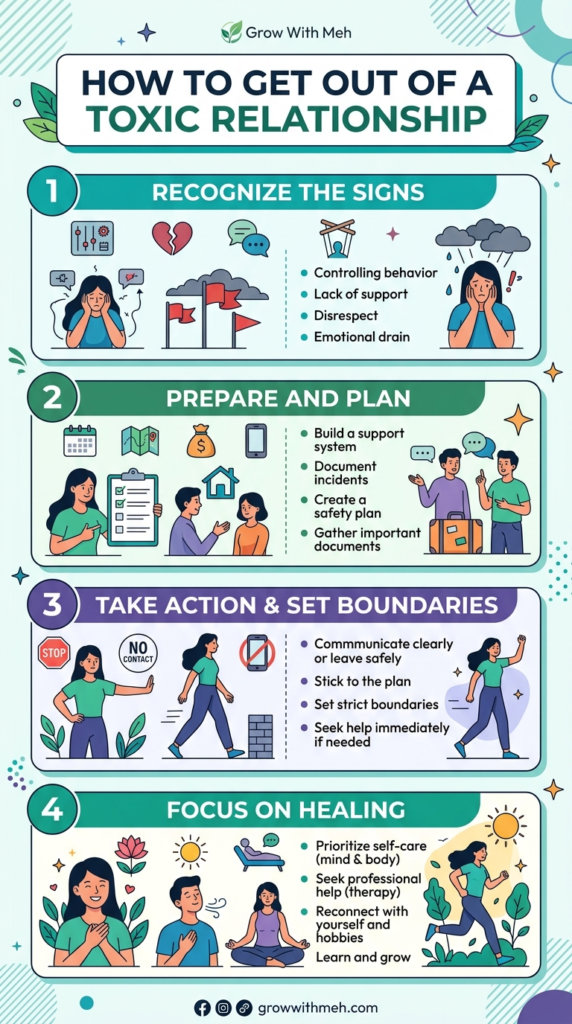
What are the signs of a toxic relationship?
A lot of women don’t realize what they’re in until they’re already deep inside it. Understanding what the signs of a toxic relationship are is often the first step, and it’s harder than it sounds because these patterns tend to arrive slowly and quietly.
- You start making excuses for your partner’s weird behavior to your family and friends.
- You constantly feel sorry and guilty for things that are not your faults.
- You are always trying to ignore your emotions and making efforts to please them.
- Feeling more anxious, emotionally exhausted, and stressed rather than calm and safe.
- Feeling slowly pulled away from your friends
- Facing constant criticism, which is also draining your self-confidence and making you feel low-grade.
- You begin walking on eggshells, trying to avoid triggering arguments or toxic communication.
- You constantly feel like something is wrong, even if you cannot fully explain it.
- You feel unsupported, controlled, or emotionally trapped in the relationship.
Why do people stay in toxic relationships?
Understanding why people stay in toxic relationships is so important before you judge yourself for staying. Leaving is not as simple as just deciding to go.
There’s an emotional attachment. Shared history, maybe shared children or finances. Fear of being alone and fear of what starting over actually looks like.
Moreover, there is often anxiety in relationships, confusion and self-doubt, and a sense of dependency that keeps you stuck. Trauma bonding can make the connection feel intense and hard to break. You may feel guilt and shame at the thought of leaving, or fear and intimidation if you try to pull away. These layers make it harder to see clearly.
Over time, this can create a strong sense of dependency in relationships, where leaving feels emotionally overwhelming. Many toxic relationships also involve a hidden power imbalance, where one person holds control, making it harder to walk away.
What the Research Says: A study found that people who experience emotional or physical abuse in relationships report higher levels of psychological distress and depression compared to those who do not.
How to Fix a Toxic Relationship Before You Decide to Leave
Before talking about leaving, it’s worth asking honestly about how to fix a toxic relationship. Not every difficult relationship needs to end. Some toxicity comes from unhealed wounds that both people carry. Some couples do the real work and build something healthier on the other side.
Fixing a toxic relationship depends on whether both people are willing to take responsibility and change unhealthy patterns. It requires honest communication, accountability, and often therapy. But if there is ongoing emotional abuse or a controlling partner, it may not be safe or realistic to fix it.
If your partner is open to counseling and consistent effort, without blame-shifting, there may be something worth rebuilding. But if the toxic behaviors include emotional or physical abuse, manipulation, or control, hear this clearly: fixing it is not your responsibility. You cannot love someone into becoming safe.
Moving On From a Toxic Relationship and Finding Yourself Again
Moving on from a toxic relationship is not a straight line, and expecting it to be will only make it harder on yourself.
Leaving is not the end of the story. It is the beginning of a different kind of healing. Many people expect instant relief, but the reality is more layered.
This stage is still part of how to get out of a toxic relationship, because staying away and not returning to old patterns is its own kind of strength.
Emotional Withdrawal Is Normal
After leaving, you may feel empty or unsettled. You might miss the person, even if the relationship hurt you. This is part of emotional withdrawal.
Your body and mind are adjusting to a different rhythm. Give yourself time to settle into this new space.
Rebuilding Your Confidence
Slowly, you start reconnecting with yourself. You begin making decisions without fear or second-guessing. You remember what brings you joy.
Rebuilding self-esteem takes time, but it happens in small, quiet ways that slowly add up.
Letting Go of Guilt and Shame
It is common to feel guilt after leaving. You may wonder if you could have done more or stayed longer.
But ending toxic relationships is not a failure. It is self-respect and self-love. Letting go of guilt is part of your emotional healing journey and personal growth.
How to heal after a toxic relationship
Learning to heal after a toxic relationship means slowly getting reacquainted with who you are outside of that dynamic. You may have stopped doing things you loved, pulled away from people who cared about you, or lost confidence in your own reading of a situation.
True healing comes from allowing yourself to move through the full recovery from a toxic relationship without rushing.
Start with what used to bring you joy before that relationship took up all the space. Maybe it’s reading, walking in a quiet place, or just sitting in your own home without anxiety.
Rebuild your relationship with your own instincts. Therapy can be a meaningful support if it’s accessible to you. So can journaling, honest conversations with people who love you, and giving yourself real grace on the hard days.
Things to Avoid During Healing
Try not to rush into another relationship just to fill the space. Avoid checking up on them or reopening communication when you feel vulnerable.
Instead, focus on gentle routines and self-care after a breakup. Even small things like rest, reflection, or spending time with people who make you feel safe can help you reconnect with yourself again.
Breaking free is just the first step. If you’re ready to focus on your own growth, explore our guide on the 5 Key Areas of Personal Development. If this transition feels like a total reset, you aren’t alone. Here is how to navigate starting over life at 30 with grace and intention.
How to Avoid Toxic Relationships in the Future
One of the quiet strengths that comes from this experience is awareness. You begin to notice patterns earlier. You trust your instincts more.
Pay attention to early signs like controlling behavior, lack of communication, or emotional manipulation. Build strong boundaries and honor them. This is where getting out of a toxic relationship becomes something deeper. It becomes about choosing healthier love from the beginning.
Bottom Line
Getting out of a toxic relationship is not something that happens in a week or even a month, and anyone who tells you otherwise isn’t being honest with you. It’s a process built on honesty, courage, and a lot of grace toward yourself. You may not feel completely ready. You may still love them. You may not know exactly what comes next.
But if something inside you already knows that what you’ve been living is not what you deserve, that knowing is enough to begin. You don’t need to have it all figured out. You just need to take the next honest step. That’s how this goes. One step. Then another. Then another.
You deserve a life filled with peace and kindness. Start reclaiming your worth today with our deep dive: How to Love Yourself: A Helpful Guide for Women. Remember, the most important healing starts from within.
FAQ Section
How do you get over a toxic relationship when you still love them
Love does not disappear overnight. Give yourself space, limit contact, and focus on healing your emotional wounds. Over time, clarity replaces confusion, builds self-identity, boosts self-esteem, and you begin to see the relationship for what it truly was.
Is it possible to fix a toxic relationship?
In some cases, yes. But only when both partners are committed to change and there is no abuse involved. Without that, the same patterns often repeat.
How do you leave a bad relationship?
You need to start with self-awareness and support. Make a plan, set boundaries, and prioritize your safety. Take it one step at a time.

Mehwish Arshad is the founder of Grow With Meh, a personal growth platform that helps women build self-awareness, emotional resilience, and a deeper understanding of themselves. For over 10 years, she has studied psychology, mindfulness, and personal development through extensive reading, research, and lived experience.