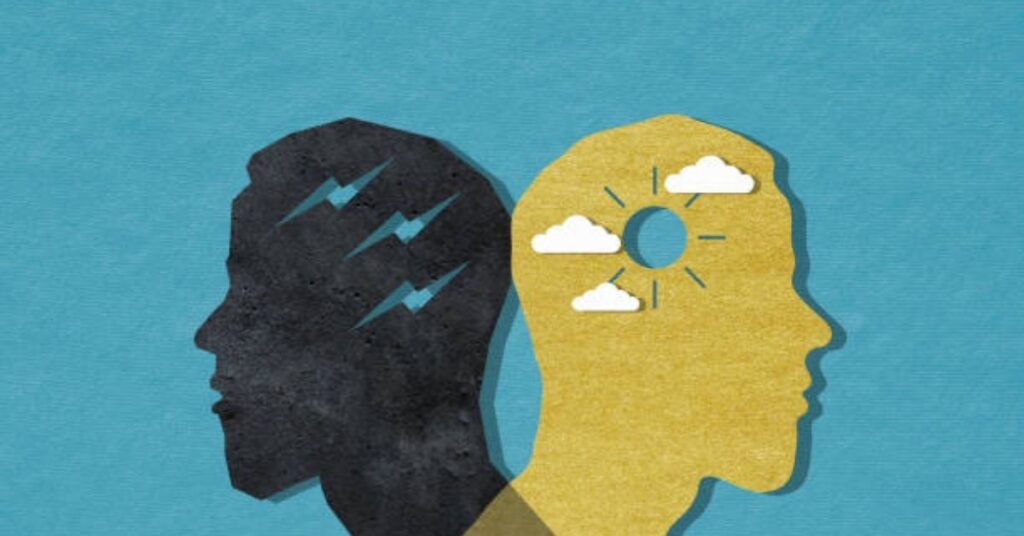

You wake up at 3 AM, and immediately the thoughts begin: I’m not good enough. I’ll never succeed. Everyone thinks I’m a failure. Before you know it, you’ve rehearsed tomorrow’s disasters, replayed yesterday’s mistakes, and convinced yourself that happiness is for other people—not you.
If this sounds familiar, you’re not alone. Research shows the average person has 60,000 to 70,000 thoughts per day, and approximately 80% of them are negative.
So, how do you renew your mind from negative thoughts? It requires a deliberate practice known as cognitive reframing: pausing to identify the toxic thought, challenging its validity with facts, and actively replacing it with a balanced, realistic narrative until the new neural pathway becomes automatic.
But here’s the transformative truth: your brain is designed to change. Through neuroplasticity—your brain’s ability to form new neural connections—you can literally rewire your thought patterns.
In this guide, you’ll discover why your brain defaults to negativity and a practical 21-day challenge to kickstart your journey.
Table of Contents
Why Your Brain Gets Stuck in Negativity
The Neuroscience of Negative Thinking
Your brain isn’t broken—it’s actually doing exactly what it evolved to do. Neuroscientist Donald Hebb discovered that “neurons that fire together, wire together.”
Every time you think a negative thought, you strengthen that neural pathway, making it easier for your brain to travel that route again.
Here’s what’s happening in your brain: The amygdala, your emotional centre, acts as a threat detector. When it perceives danger—real or imagined—it hijacks your prefrontal cortex (the rational brain) and triggers the fight-or-flight response.
Over time, repetitive negative thinking creates superhighway neural pathways that your brain defaults to automatically.
Studies show negative experiences impact us five times more powerfully than positive ones. This is why you can receive ten compliments and one criticism, yet obsess over the criticism for days.
The Negative Thought Cycle: How It Starts and How to Break It
The negative thought cycle starts with a trigger, creates a negative thought, activates emotional and physical reactions, influences behaviour, and strengthens neural pathways—repeating automatically unless consciously interrupted.
| Interrupting the cycle weakens the pathway. | What Happens | Example | How to Interrupt the Cycle |
| Trigger | A situation or event activates the mind | A message goes unanswered | Pause and observe without interpreting the event |
| Negative Thought | Automatic, self-critical interpretation | “They’re ignoring me.” | Ask: Is this a fact or a feeling? |
| Emotional Response | Emotions arise based on the thought | Anxiety, sadness, shame | Name the emotion to reduce its intensity |
| Physical Reaction | The body responds to emotional stress | Tight chest, racing heart | Slow breathing, grounding, gentle movement |
| Behavioral Response | Actions driven by discomfort | Withdrawal, avoidance, overthinking | Choose a small, opposite or neutral action |
| Reinforced Neural Pathway | Repetition strengthens the belief | “This always happens to me.” | Interrupting the cycle weakens the pathway |
This loop happens so quickly that most people experience it as automatic and unchangeable. But here’s the hopeful truth: neuroplasticity works both ways.
Common Thinking Traps That Create Negative Thoughts
Psychologist Aaron Beck discovered that many negative thoughts come from common “thinking traps.” These are habits of the mind that make situations seem worse than they really are.
Some of the most common ones include
- All-or-nothing thinking: Believing that if you’re not perfect, you’ve completely failed.
- Catastrophizing: Assuming the worst will happen from one small mistake.
- Mind reading: Thinking you know what others think about you, even when there’s no proof.
- Overgeneralizing: Letting one bad experience convince you that bad things always happen to you.
- Focusing only on the negative: Ignoring the good and paying attention only to what went wrong.
- Blaming yourself for everything: Taking responsibility for things that aren’t entirely your fault.
- Emotional reasoning: Believing something is true just because it feels true, like thinking you’re a failure because you feel low.
The good news is that once you notice these thinking traps, you can start to challenge them. Awareness is the first step toward changing negative thought patterns and building a healthier mindset.
Your Brain Can Change
Research using fMRI brain scans shows measurable changes in brain structure after just eight weeks of consistent meditation practice. Specifically, studies reveal:
- Reduced amygdala size and reactivity (less anxiety and fear)
- Increased grey matter in the prefrontal cortex (better emotional regulation)
- Strengthened connections between the rational and emotional brain centres
- Enhanced hippocampus function (improved memory and learning)
The timeline for change: initial habit formation begins around 21 days, deeper neural rewiring occurs over 66 to 90 days, and significant transformation manifests within three to six months of consistent practice.
The Root Causes: Where Negative Thoughts Come From
Before we dive into the solution, it’s crucial to understand the source of your negative thoughts. This knowledge removes shame and helps you address root causes rather than just symptoms.
Childhood Programming and Early Experiences
Critical words heard repeatedly during childhood (“You’re not smart enough,” “You’ll never succeed”) become the inner voice in adulthood. Dysfunctional family patterns and attachment wounds can have lasting effects on self-perception.
The brain is most impressionable between ages 0-7, and experiences during this critical period shape default thought patterns for years to come.
Trauma and Unprocessed Experiences
Trauma—whether a single incident or complex ongoing experiences—creates persistent negative thought loops. PTSD manifests as intrusive thoughts that feel impossible to control.
The body keeps the score, meaning physical memory affects mental patterns. Understanding this connection is essential for addressing trauma-based negative thinking.
Modern Environmental Factors
Social media creates a comparison trap. The dopamine-driven scroll addiction keeps you viewing others’ highlight reels while comparing them to your behind-the-scenes reality.
Studies show a direct correlation between increased social media use and rising depression rates. FOMO (Fear of Missing Out) creates a constant sense of inadequacy.
The 24/7 news cycle amplifies perceptions of threat. “If it bleeds, it leads” journalism means you’re constantly exposed to worst-case scenarios. Doomscrolling becomes an anxiety-inducing habit that reinforces your brain’s negativity bias.
Toxic relationships and environments continuously reinforce negative beliefs. Criticism from partners, family, or coworkers; narcissistic abuse and gaslighting; and workplace bullying and chronic stress—all create environments where negative thinking thrives.
Performance-based identity ties are worth productivity. Hustle culture and burnout make rest feel like failure. Perfectionism ensures you never feel “enough” regardless of accomplishments.
Mental Health Conditions
Sometimes negative thinking crosses from normal human experience into clinical territory.
Depression and anxiety involve chemical imbalances in serotonin, dopamine, and norepinephrine that make positive thinking neurologically difficult. OCD creates intrusive thought loops that feel uncontrollable.
Understanding the difference between situational sadness and clinical depression is crucial.
Professional assessment helps determine whether medication might create the foundation for thought-work to succeed. It’s important to know: medication and mind renewal work together, not as either/or options.
The 21-Day Mind Renewal Challenge
Research shows that 21 days are required for habit formation, making it the perfect time to begin rewiring your brain.
Week 1: Awareness & Foundation (Days 1-7)
Daily practices: Morning gratitudes (3 items), thought journaling throughout the day, evening review, and Three Good Things reflection.
Key actions: Set up a journal, choose 3 affirmations, identify the top 3 negative patterns, unfollow negative accounts, download a meditation app, find an accountability partner, and do a weekly review.
Week 2: Active Intervention (Days 8-14)
Daily practices: Gratitudes (no repeats), affirmations aloud, 5-minute meditation, challenge every negative thought using the 5 questions, and consume positive content.
Key actions: Create affirmation cards, take a gratitude walk, write a gratitude letter, have a digital detox evening, do a body scan meditation, share a win with a partner, and have a midpoint celebration.
Week 3: Integration & Lifestyle (Days 15-21)
Daily practices: 5 deep gratitudes, mirror affirmations, 10-minute meditation, automatic thought challenging, 20-minute walk, deep journaling.
Key actions: Set a boundary with toxic influence, send a gratitude letter, try a new meditation, create a victory list, plan a maintenance routine, share the journey story, and have a final celebration.
Maintenance (Day 22 onward): Keep core practices—daily gratitude, morning affirmations, meditation, and weekly check-ins.
Allow flexibility; missing a day isn’t failure. With consistency, you’ll notice more positive default patterns, faster recovery from spirals, and increased resilience.
When Negative Thoughts Return
Expect setbacks—they’re normal, not failure. Neural pathways weaken but don’t disappear overnight. Stress, trauma, or illness can trigger old patterns.
Emergency protocols for dark moments:
- Say “STOP” out loud
- Practice 4-7-8 breathing (inhale 4, hold 7, exhale 8) for 2 minutes
- Use 5-4-3-2-1 grounding
- Take a 10-minute walk
- Text your accountability partner
The 24-hour rule: Negative thoughts are worst in the moment. Promise yourself to wait 24 hours before believing them. They usually lose power with time and distance.
Physical support matters. Exercise stimulates neurogenesis, the creation of new brain cells. Just 20-30 minutes of aerobic activity three to five times weekly reduces depression as effectively as medication.
Sleep seven to nine hours nightly—sleep deprivation amplifies anxiety by 60%. Focus nutrition on omega-3s, complex carbs, and fermented foods while minimizing sugar and processed foods.
Your Journey Begins Today
Renewing your mind from negative thoughts isn’t mystical—it’s scientifically backed neuroplasticity that you direct intentionally. Your brain is designed to change, and you hold the power.
Take action today:
- Start your thought journal
- Choose 3 affirmations and write them somewhere visible
- Tell one person you’re beginning this journey
- Download a meditation app and try your first session
- Schedule a therapy consultation if you need professional support
Six months from now, you could be living with a fundamentally different mental landscape.
The thoughts tormenting you today can become whispers you barely notice. The peace, confidence, and hope you’re seeking aren’t reserved for “other people”—they’re available through consistent application of these evidence-based practices.
Your mind is renewable. Your patterns are changeable. Your best life is waiting.
The question isn’t whether transformation is possible. It’s whether you’ll begin today.
Frequently Asked Questions
How long does it take to renew your mind from negative thoughts?
Initial changes appear within 21 days of consistent practice. Significant neural rewiring occurs over 66 to 90 days. Most people notice a meaningful transformation within three to six months. The timeline depends on pattern depth, consistency, support, and the presence of mental health conditions.
Can you really rewire your brain from negative thinking?
Yes. Neuroscience confirms neuroplasticity—your brain’s ability to form new connections throughout life. MRI scans show measurable changes after eight weeks of meditation, including reduced amygdala volume and increased prefrontal cortex activity, supporting better emotional regulation.
Why do I keep struggling with the same negative thoughts?
Deeply grooved neural pathways from repetition, confirmation bias, unprocessed trauma, environmental triggers, and brain chemistry issues all contribute. Struggling doesn’t mean you’re broken—it means you need intentional reprogramming with the right tools and support.

Mehwish Arshad is the founder of Grow With Meh, a personal growth platform that helps women build self-awareness, emotional resilience, and a deeper understanding of themselves. For over 10 years, she has studied psychology, mindfulness, and personal development through extensive reading, research, and lived experience.